
Suitcase Review is reader-supported. When you buy through our Amazon links, we may earn a commission at no extra cost to you. Learn more.
Plastic-wrapping a suitcase adds a protective layer for the trip through baggage handling. You can pay for it at the airport or do it yourself at home with a roll of luggage wrap and some tape. Here is how, plus the trade-offs to weigh first.
Pack the suitcase completely, then wrap thick, brightly colored luggage wrap around the middle several times, turn and wrap lengthwise over the handle and wheels, tape the loose end, and cut openings for the spinner wheels and handle. It takes about 5–10 minutes at home. Wrapping protects the exterior and makes tampering more obvious, but security may cut it off for inspection and it creates plastic waste.
Should you wrap your suitcase?
It can be worth it, especially for expensive luggage. Checked bags are handled quickly and in large numbers, and rough handling can damage both the suitcase and what is inside it. A layer of wrap protects the exterior from scuffs and tears and discourages anyone from opening the bag.
Keep in mind that airport security can remove the wrap if your bag is selected for inspection, so it isn’t a guarantee.
How to wrap a suitcase at home
Many travelers wrap their own luggage. It costs a little time and money, but it is easy to do in five steps.
Step 1: Choose the right wrapping plastic
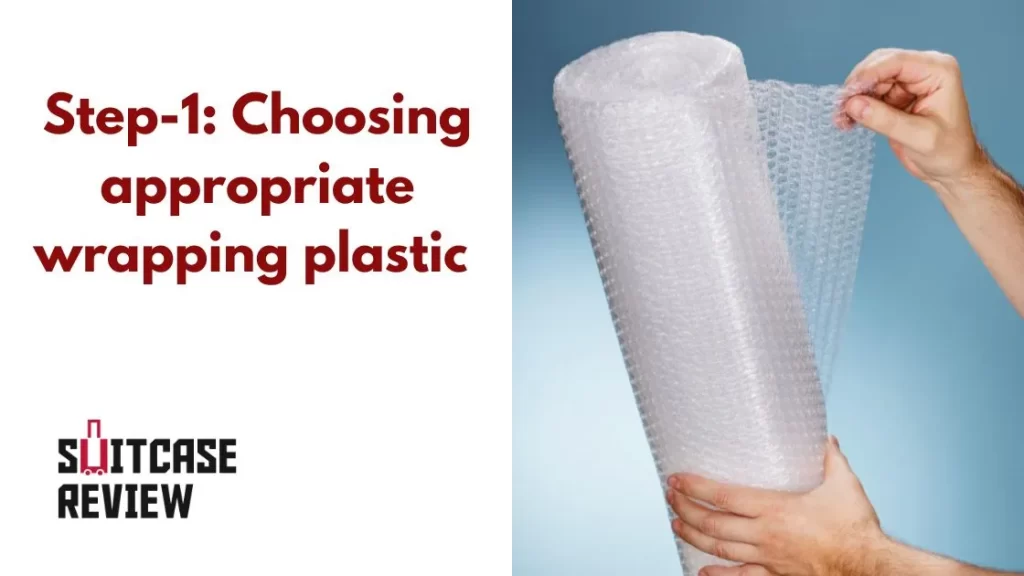
Use a plastic wrap made for luggage or industrial use. These wraps are thick enough to protect your bag and usually come on a roll with a cylindrical handle that makes wrapping easier. A bright, vivid color also makes your suitcase easier to spot at baggage claim.
Step 2: Finish packing first
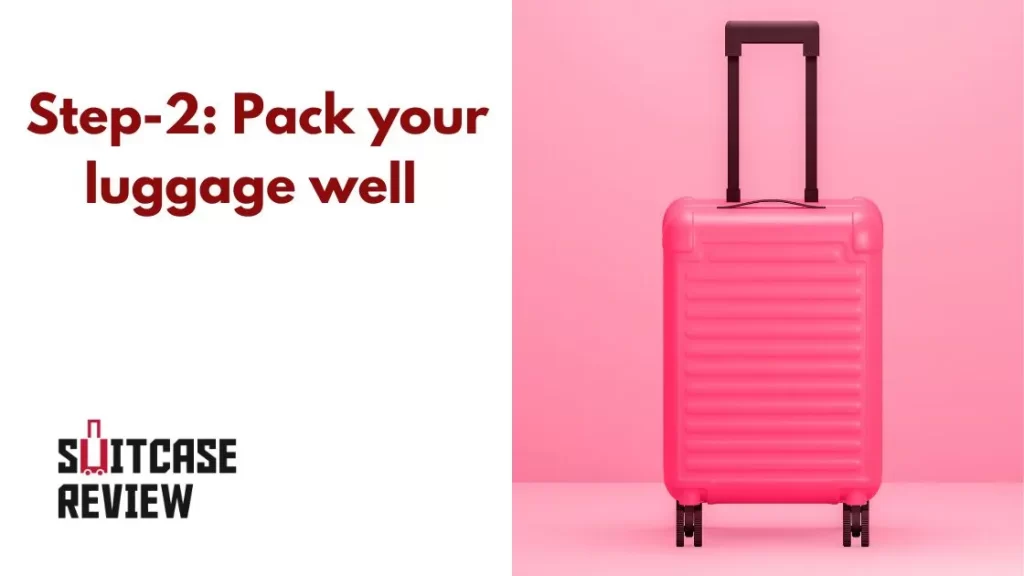
Make sure you have packed your luggage well and won’t need to open it again before you arrive. Keep anything you need during the journey in your carry-on, so you don’t have to cut the wrap off and redo it.
Step 3: Apply the wrap
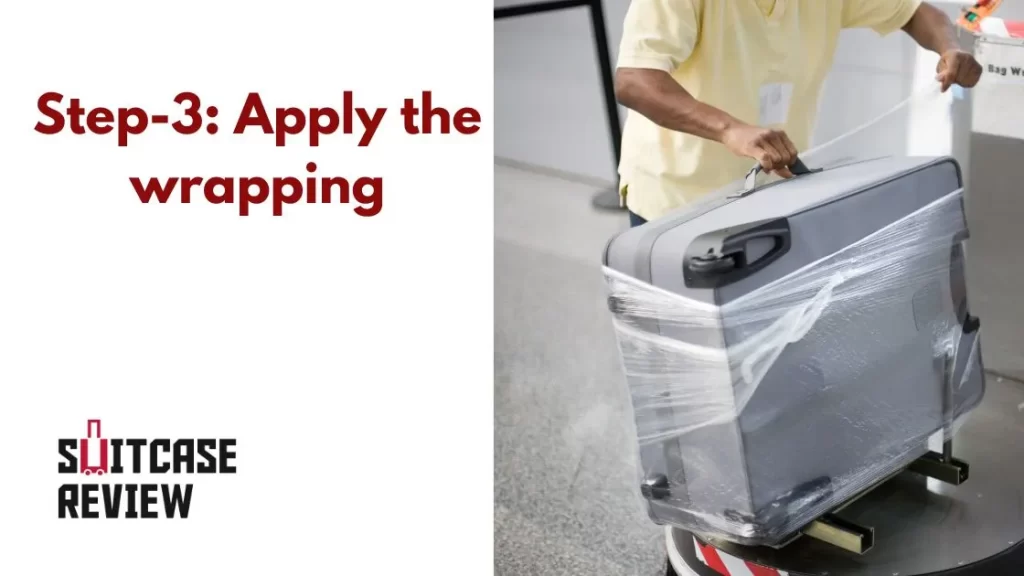
Start at the center: tuck the end of the wrap beneath the side handle and roll it around the suitcase from one end to the other. Go around two or three times so the layer is thick. Then turn the roll and wrap lengthwise to cover the telescopic handle and the spinner wheels.
Step 4: Tape the end securely
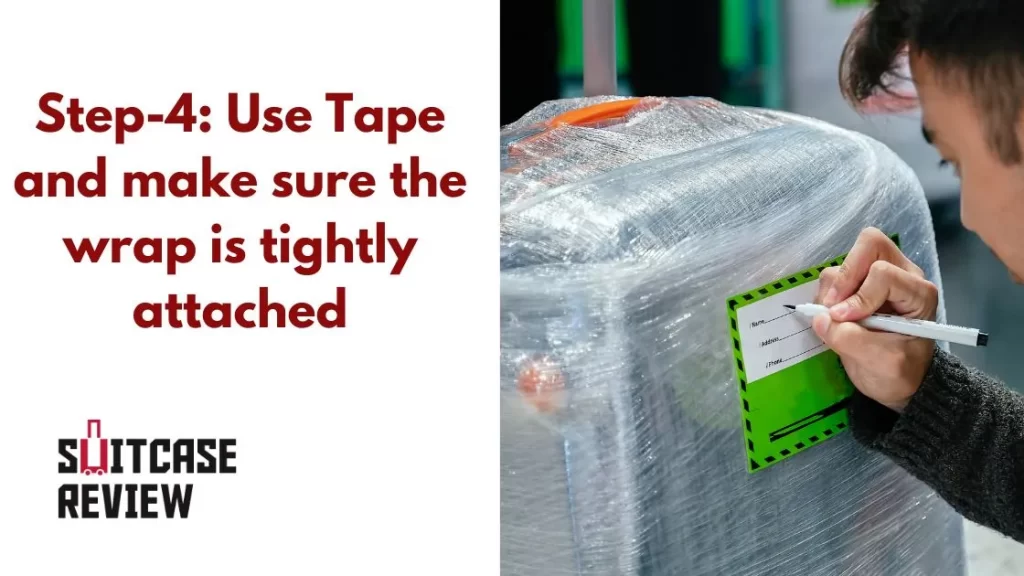
When you are done, tape down the loose end of the wrap so it doesn’t come undone in transit.
Step 5: Cut holes for the wheels and handle
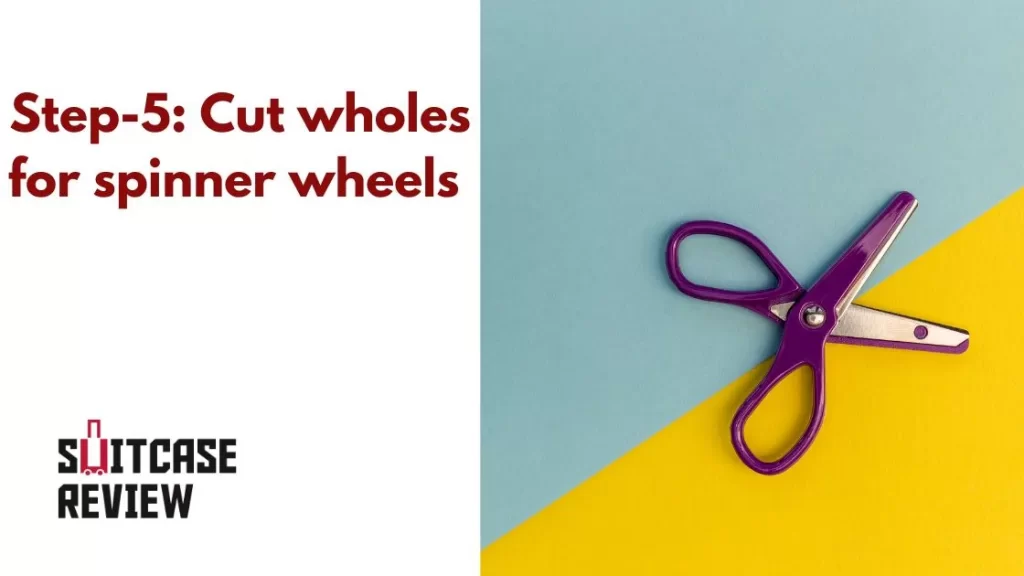
Cut openings for the spinner wheels at each bottom corner and for the handle, so the suitcase can still roll and be carried.
Pros and cons of plastic wrapping a suitcase
Pros
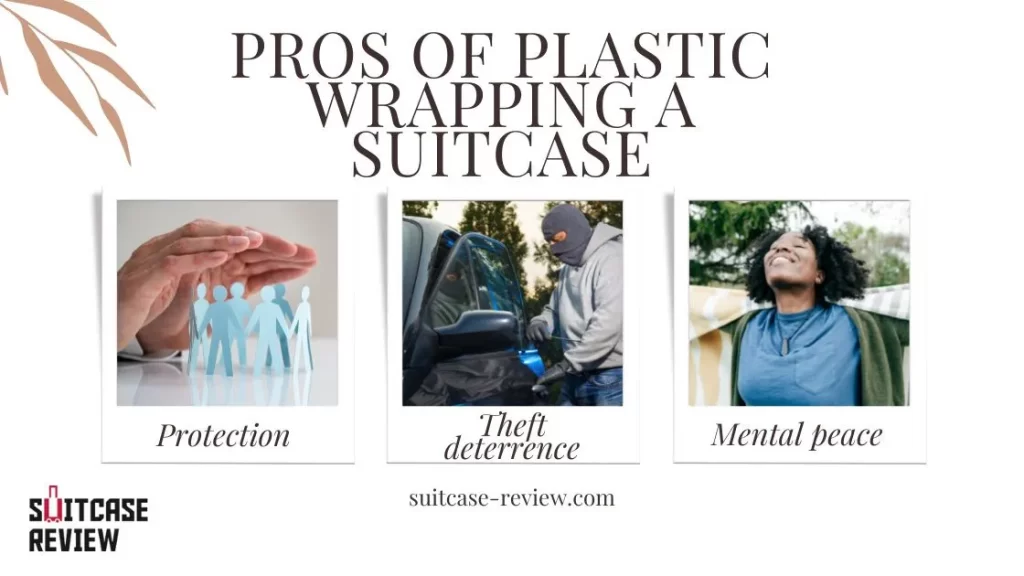
- Helps prevent damage: an extra layer helps protect against water and knocks, which matters if you pack fragile items such as electronics or glass.
- Protects the exterior: the wrap takes the scuffs and tears instead of your suitcase.
- Deters tampering: it is harder to open the bag unnoticed, which discourages theft and anyone slipping items into it.
- Peace of mind: less to worry about while your bag is out of sight.
Cons
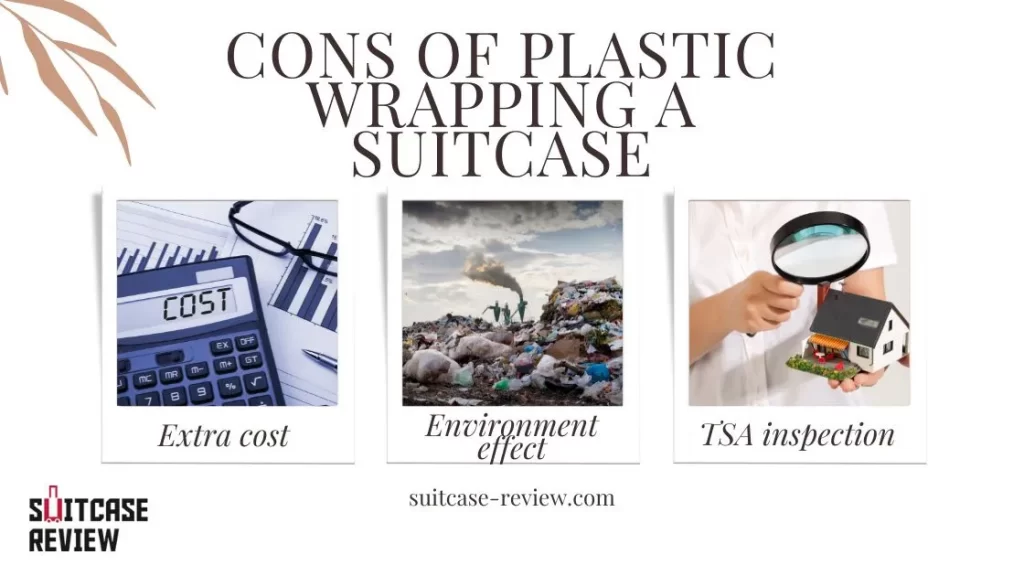
- Extra cost: whether you buy wrap or pay for a service at the airport, it adds to your trip.
- Plastic waste: the wrap is thrown away after one trip.
- Security inspection: if your bag is checked by hand, the wrap is cut off and the money is wasted.
Wrapping your bag at the airport
Many airports have wrap stations on the departure level, near the check-in desks. They use wrapping machines, which do the job quickly but aren’t practical for personal use. The price varies by company and by the size and shape of your bag.
- Professional service: usually done in about a minute.
- At home: about 5–10 minutes.
Environmental impact and alternatives to plastic wrap
Plastic wrap is usually thrown away after a single trip, and much of it is not recycled. Plastic decomposes very slowly and can end up polluting soil and oceans, where it harms marine life.
If you want protection without the waste, consider a reusable fabric wrap or biodegradable paper, or a washable luggage cover that you can use on every trip.

- Best Duffle Bags: Top 3 Picks for Gym, Travel & Waterproof Use - May 3, 2026
- Samsonite Evolve SE: The Ultimate Travel Companion - November 2, 2023
- US Traveler Luggage Review – The Boren Collection - September 10, 2023